
New floors that bring your whole home up to date
Hardwood, engineered, luxury vinyl plank and tile — picked for how you actually live in each room and fitted for Calgary’s dry winters. One contact through the whole project, from first sample to the last board.
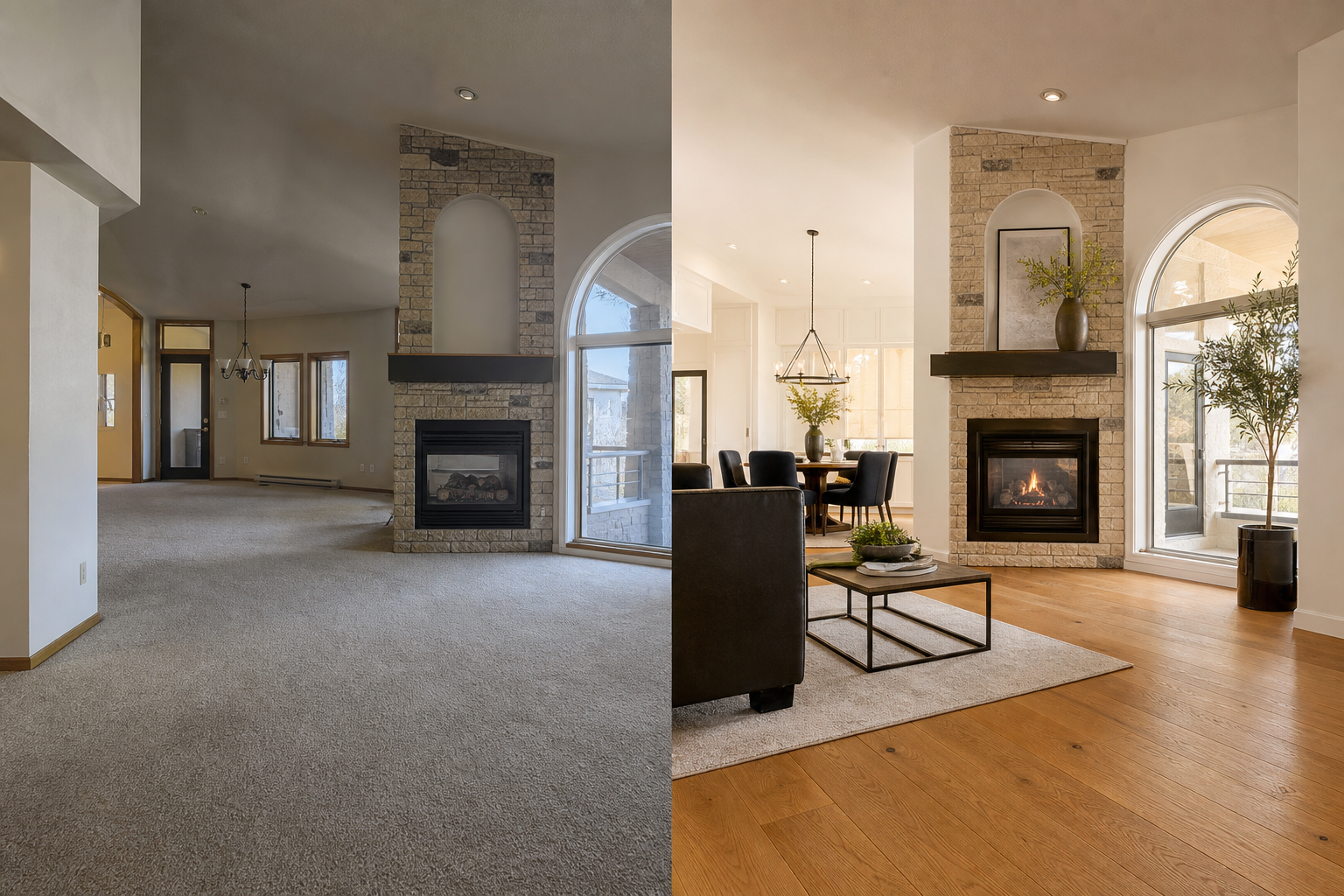
New floors are the fastest way to modernize a home
Of every upgrade you can make, swapping the floors changes how a home reads more than almost anything else. The floor is the first surface your eye catches and the one underfoot all day, so the moment it goes contemporary — wide oak planks, large-format porcelain, a low-sheen vinyl in a soft natural tone — the rooms above it instantly feel brighter, bigger and current. We start with how you use each space and the look you are going for, then point you to the material that delivers it, instead of pushing one product across the whole house.
Calgary floors live a particular life. Our winters run long and indoor air turns genuinely dry, which makes natural wood move — it shrinks, and a floor that went in too fast will split, cup or open at the seams. The right species, the right cut and proper acclimatization keep that in check; skip those and it shows by the first heating season. We pick and fit with the climate built into the plan, so the fresh floor you love this spring still looks current and crisp winters down the road.
Refreshing a single main floor or flowing one material through the entire home for a clean, continuous look, the whole thing runs through one point of contact. No bouncing between a showroom rep, a scheduler and a crew who have never met. The person who walks your rooms is the same person keeping you posted as the boards go in.
- Solid and engineered hardwood, nail-down or glue-down
- Luxury vinyl plank (LVP) — waterproof, warm underfoot, quiet
- Laminate for busy, high-traffic rooms on a leaner material budget
- Ceramic, porcelain and natural-stone tile
- Subfloor levelling, repair and moisture management
- Removal and haul-away of the old floor built into the scope
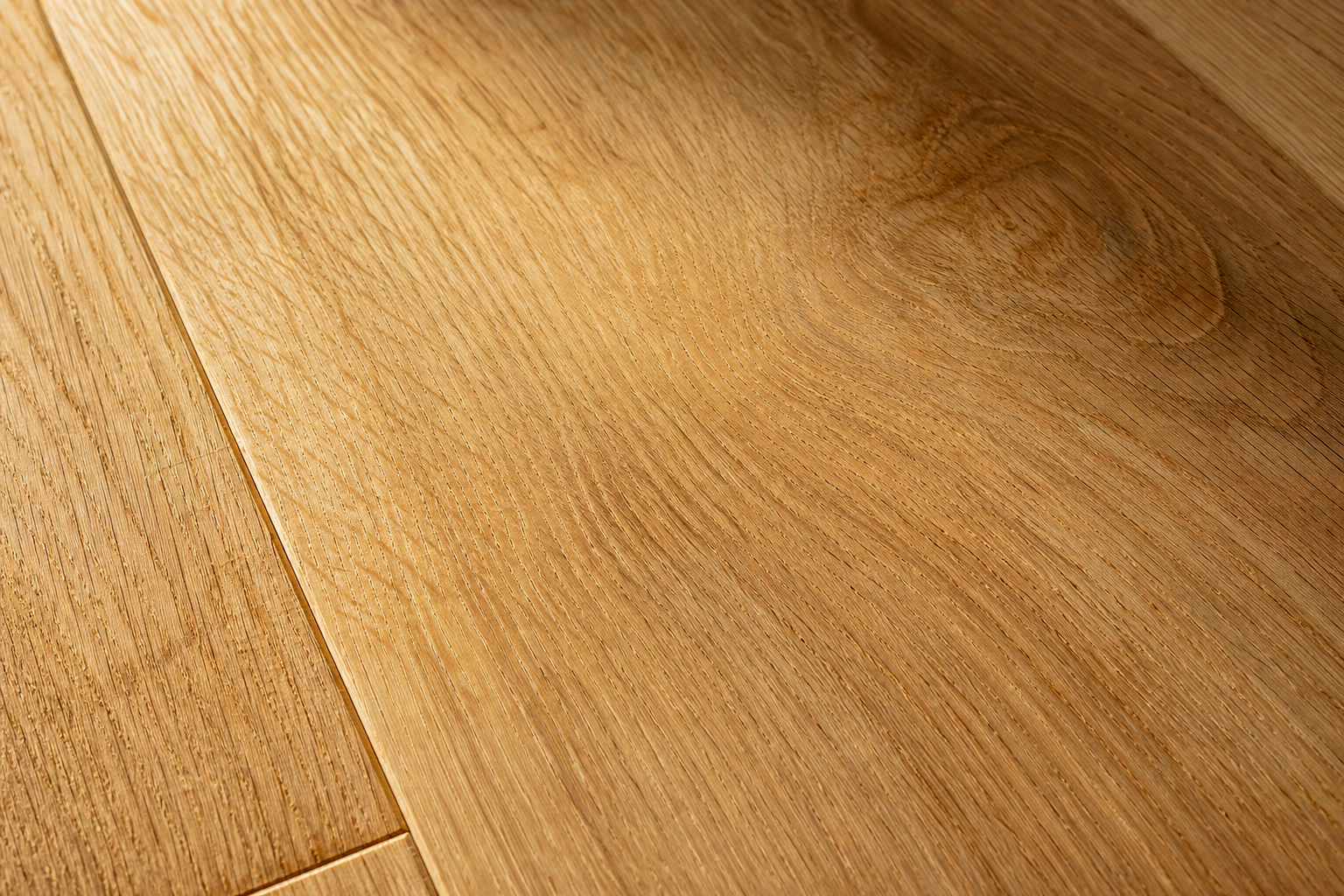
Hardwood: the upgrade that keeps paying off
Hardwood is still the floor most people picture in a finished, grown-up home, and for good reason. Real wood has a depth no printed surface can match — the grain catches the light differently as you cross the room, the colour warms and deepens over the years, and a scuff reads as lived-in rather than ruined. We work mostly in white oak because it shrugs off Calgary’s dry winters: it is dense, dimensionally steady, and it takes a warm natural finish that feels right at home in a modern space.
For most Calgary homes we steer you toward engineered hardwood — a real hardwood wear layer bonded over a stable plywood core. That build stands up to the seasonal expansion and contraction our humidity swings bring, which means tighter seams and fewer winter gaps, and it sits happily over in-floor radiant heat. Solid hardwood is still a great pick for main and upper floors, where its full thickness lets it be sanded and refinished for decades. We will tell you straight which one suits your rooms; solid wood in a basement below grade is one we will always talk you out of.
Before a single board gets fastened, the wood acclimatizes inside your home, under your own conditions, so it settles to the moisture level it will actually live at. That bit of patience is the whole difference between a floor that stays quiet and one that reminds you of every dry January.
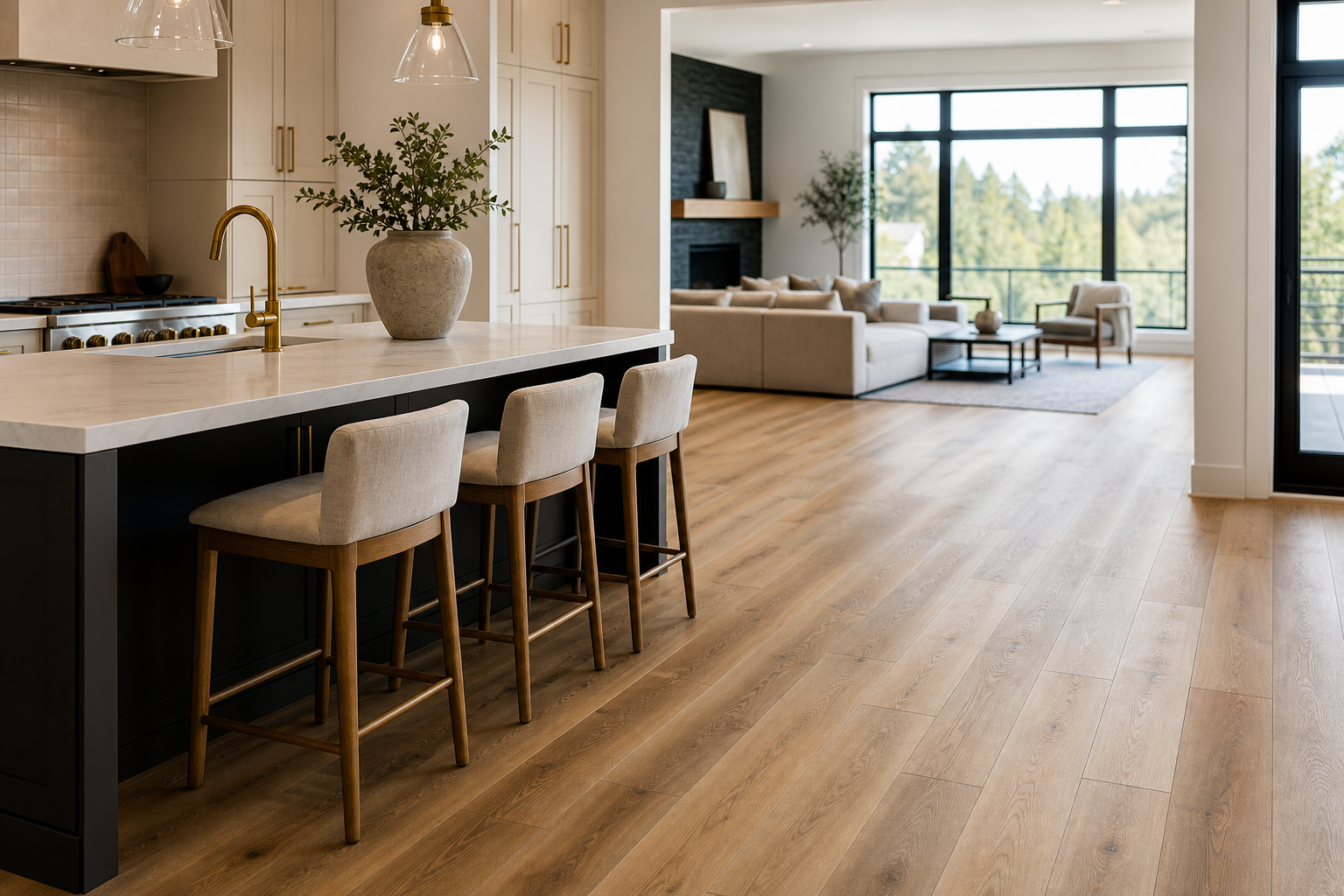
Luxury vinyl plank: the modern all-rounder
Luxury vinyl plank has become the floor we reach for most in Calgary homes — and that’s about performance, not trend-chasing. It is fully waterproof, so it earns its place in basements, mudrooms, entries and any room where snow-melt, kids and pets are part of the routine. It runs warmer and softer underfoot than tile, plays noticeably quieter than laminate, and today’s better products carry texture and a printed grain so convincing that visitors crouch down to double-check.
For a family floor that has to look sharp and still take daily punishment, LVP is tough to beat. We fit rigid-core plank with the right underlayment and the expansion gaps each room needs, so it stays flat and silent rather than clicking or showing its seams. Because it rides Calgary’s humidity swings far more easily than natural wood, it is also our go-to when you want one unbroken look flowing from the main floor down into a finished basement without switching products at the stairs.
- Waterproof — at home in basements, mudrooms and below grade
- Warm and soft underfoot, with sound-dampening underlayment
- Works over in-floor radiant heat
- True-to-life wood and stone textures in fresh, natural tones
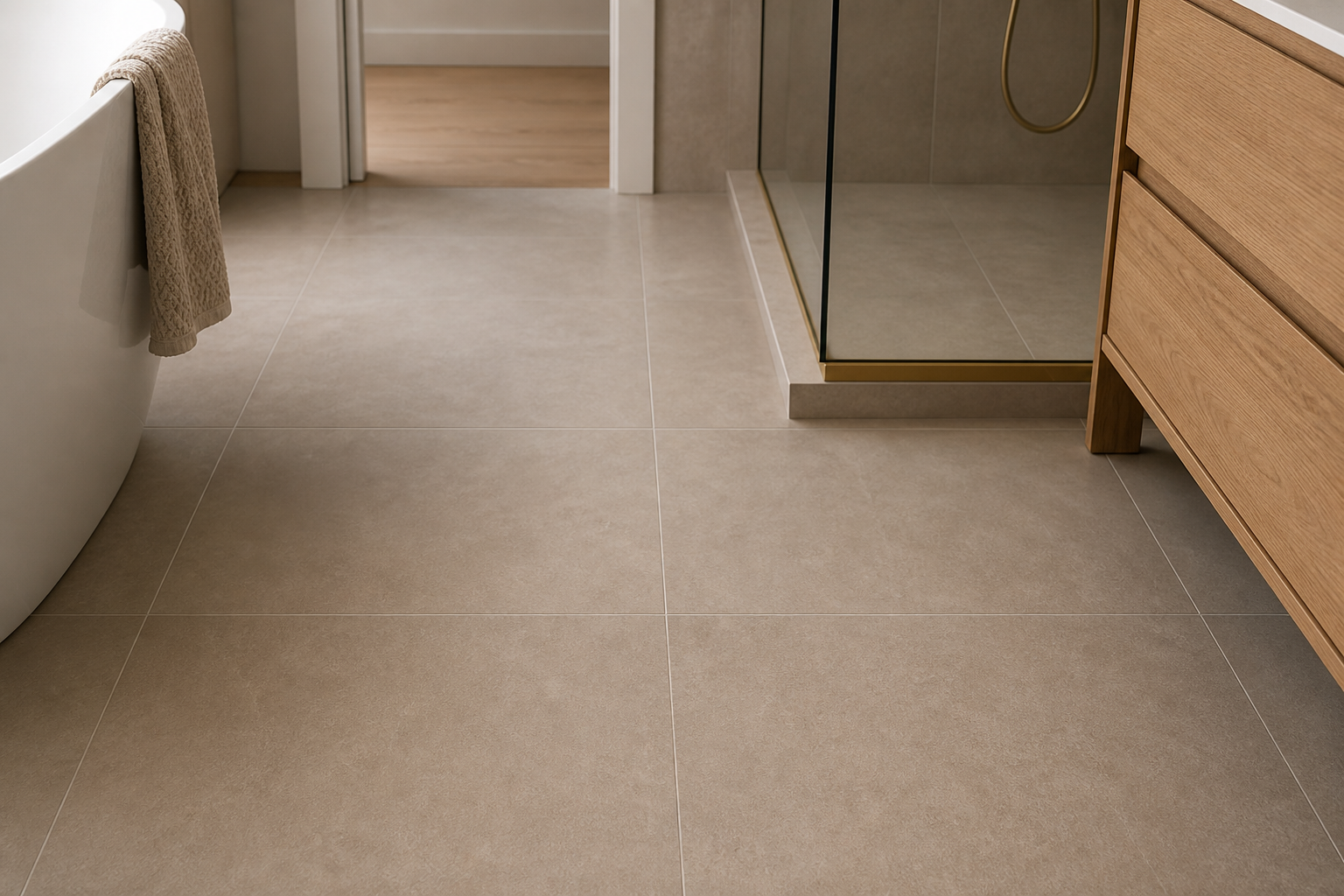
Tile and stone: crisp, cool and built for water
Tile is the right call wherever a surface has to look great and shrug off water — bathroom floors, kitchen and mudroom thresholds, a statement entry, the strip beneath a media wall. We work in ceramic, large-format porcelain and natural stone, and we treat the format and grout line as design decisions in their own right, because a tile floor’s layout shapes the room as much as the colour does. A wide, low-contrast grid feels clean and modern; a herringbone entry makes a sharp first impression the second you step through the door.
Tile is also where prep gets exposed fastest. Laid over an unprepared or moving base, it will crack at the grout lines and lift at the corners no matter how good the tile is. We build the base properly — uncoupling membrane where it is called for, a dead-flat surface, the correct setting material — so the floor holds. Pair it with in-floor heat and a tiled bathroom or entry sheds the one thing people dislike about tile while keeping everything they love.
What’s underneath is what makes or breaks the floor
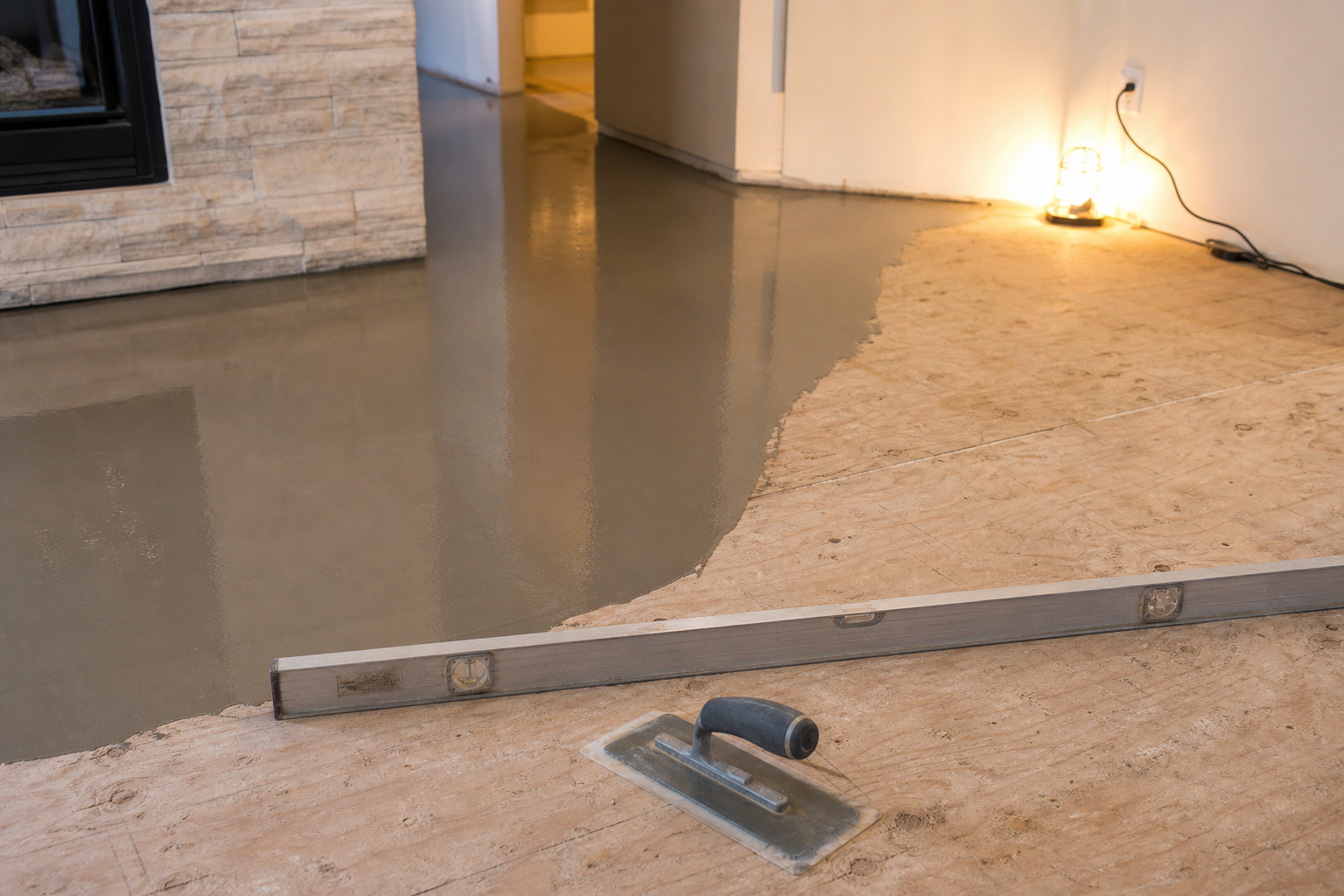
Just about every flooring problem we get called out to fix — squeaks, gaps, a plank with flex, tile that cracked inside a year — traces back to what sat under the floor, not the floor itself. A beautiful material over a bad subfloor fails like a bad material. So before anything goes in, we lift the old surface and read what’s below: how level it is, whether it’s sound and well-fastened, and what the moisture picture looks like, which matters enormously below grade in a Calgary basement.
Then we set it right. We fill the low spots, grind the high ones flat, re-secure or replace failing sheathing, and deal with moisture before it can ever reach the finish floor. It is the unglamorous part of the job, and it is the entire reason a floor stays tight and silent for years instead of talking back the first winter. We would rather invest the extra day in the base than schedule a return trip later.
From first walkthrough to the final board
Flooring touches every room and lives underfoot, so it is naturally disruptive — which is exactly why a clear process matters: you always know where things stand. Here is how a project runs with us, beginning to end, through a single point of contact.
- In-home consultation and measure. We walk the rooms, check the existing floor and subfloor, talk through how each space gets used, and measure for accurate material quantities — no guesswork, no padding.
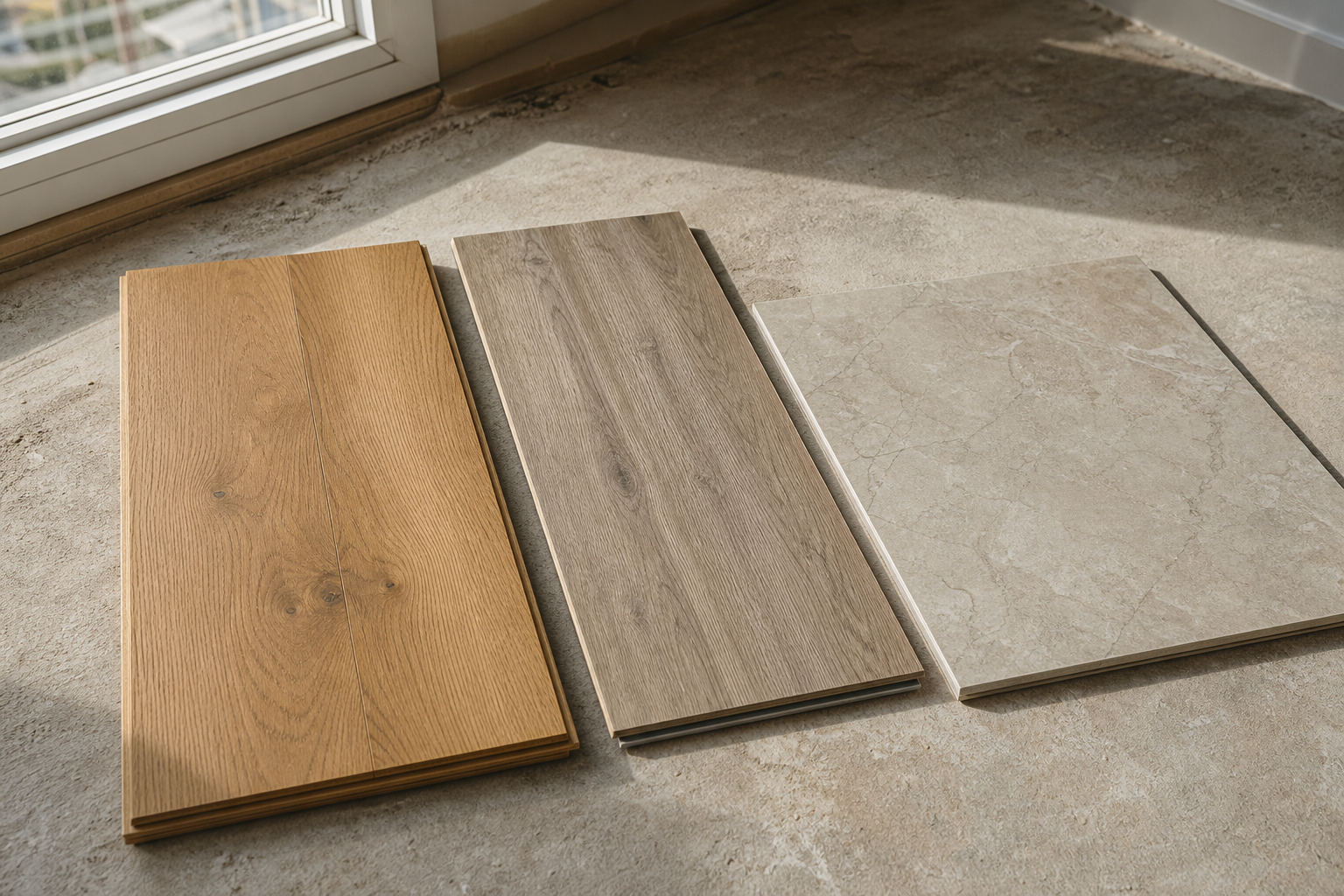
- Material selection in your own light. We bring samples into your home and lay them out under your lighting, against your walls and cabinetry, because a floor looks like a different material in a showroom than it does in your living room.
- A written, itemized quote. You get a clear scope and a fixed-price written quote — demolition, prep, material and install each broken out, so you can see exactly what you are paying for. The number on the page is the number.
- Prep first, then install. We protect finished surfaces, move the furniture, get the subfloor right, then lay the floor. Daily cleanup keeps you from living on a job site any longer than necessary.
- Walkthrough and handover. We go room by room with you, sort any touch-ups before we leave, and give you the plain version of how to care for the material so it ages the way it should.
What flooring tends to cost in Calgary
Every floor gets quoted from a real measure of your rooms and the shape of what’s underneath — the only honest figure is a written one. That said, it helps to plan against a range, so the numbers below are typical Calgary planning ranges by material, installed, with normal subfloor prep included. Your exact figure follows a written quote once we have seen the space.
Ranges are for planning only and reflect typical Calgary projects; they are not a quote. The material, room layout, stairs, and subfloor condition all move the final number. Your exact price is set by written quote after an in-home measure.
What moves the number
The things people ask first.
Which flooring works best in a Calgary home?+
That comes down to the room, but engineered hardwood and luxury vinyl plank both ride Calgary’s dry-winter humidity swings far better than solid wood. Engineered hardwood gives you genuine wood with calmer seasonal movement and runs happily over radiant heat. LVP is the most forgiving option for basements, mudrooms and homes with kids or pets, since it is fully waterproof. We go room by room and recommend the material that fits how each space is actually used, rather than selling one floor for the entire house.
Why do hardwood floors gap or squeak through Calgary winters?+
Our indoor air turns genuinely dry across the heating season, and natural wood gives up moisture and shrinks. When a floor went in without first acclimatizing the wood to your home, or over a poorly prepped subfloor, that movement turns into gaps and squeaks. We let the wood settle to your conditions before fastening a single board, choose dimensionally steady species and cuts, and prep the subfloor properly — that’s what keeps a floor quiet and tight through the dry months.
What’s the difference between solid and engineered hardwood?+
Solid hardwood is one piece of wood through its full thickness, which lets it be sanded and refinished many times over decades — great for main and upper floors. Engineered hardwood is a real hardwood wear layer over a stable plywood core, which stands up to seasonal expansion and contraction and sits comfortably over radiant heat. Both are genuine wood underfoot. In Calgary we usually favour engineered for its stability, but we’ll tell you honestly which one fits your space and your plans.
Is luxury vinyl plank actually any good, or just cheaper?+
Good LVP earns its spot on merit, not as a fallback. It’s fully waterproof, warm and quiet underfoot, and the better rigid-core products carry texture and grain convincing enough to pass for wood. It’s our most-installed floor in Calgary precisely because it looks sharp and stands up to real family life. Quality does range widely, though — we fit products we’d put in our own homes and keep you clear of the thin, hollow-feeling ones.
Can you install flooring over in-floor radiant heat?+
Yes. Engineered hardwood, luxury vinyl plank and tile all work over in-floor heat, and tile in particular pairs beautifully with it. We follow the manufacturer’s specifications for expansion gaps, adhesives and maximum temperatures so the heat and the floor work together rather than fighting each other. We’ll confirm your material choice is rated for radiant heat before anything gets ordered.
Do you prep the subfloor, or just lay the new floor on top?+
We prep it, every single time — it’s the part of the job that decides whether a floor holds up. Before installing, we strip the old surface, read the subfloor for level, soundness and moisture, then fill low spots, re-secure or replace failing material, and handle moisture before the finish floor goes down. Skipping this is the number-one reason floors squeak, gap or crack later, so it’s never something we cut.
Do you remove and haul away the old flooring?+
Yes. Tearing out the existing floor and hauling away the debris is built into the scope of our flooring quotes. Pulling the old floor is also our first real look at the subfloor, so it’s baked into how we work rather than tacked on as an extra.
Do I have to move my furniture before you start?+
We take care of furniture moving as part of the job — no need to empty the house. A few larger or specialty items, like a piano or a pool table, may need separate arrangements, and we’ll flag anything like that at the in-home measure so day one holds no surprises.
How long does a flooring installation take?+
A single room, prep included, usually runs one to two days. A full main floor or a whole-home install typically takes three to seven days depending on the square footage, the material and how much subfloor work is involved. We give you a realistic timeline in the written quote — not a hopeful one — and keep you posted as the work moves along.
Can I run one floor through the entire house?+
You can, and it’s often the most effective design move on the table — a single material flowing from the entry across the main floor and down into a finished basement makes a home feel more open, brighter and pulled-together. Thanks to Calgary’s humidity swings, a stable engineered hardwood or a quality LVP are the materials best suited to running continuously between levels. We’re glad to plan a whole-home flooring scheme around the look you’re after.
Let’s plan your floors
Tell us which rooms you’re thinking about and the look you’re going for. We’ll come out, measure, lay samples down in your own light, and give you a straight written quote for the right material — fitted to last through Calgary’s winters.